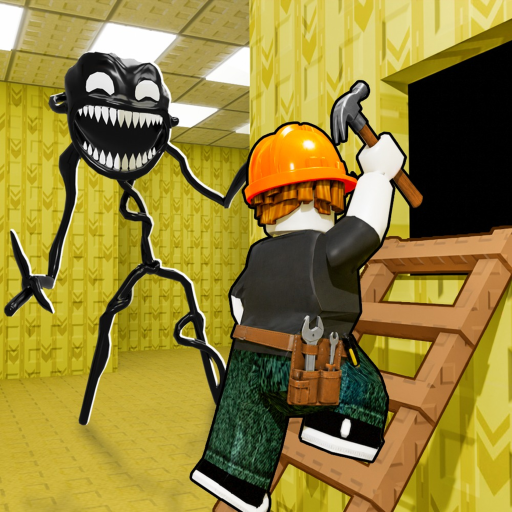
Build Your Backrooms Building and Monster Progression Guide
Build Your Backrooms building and monster progression connects rooms, slots, catches, cash, purchases, and maze testing into one route. Use live checks.
This Build Your Backrooms Building And Monster Progression page starts from the evidence available for the current game and keeps changing values in the live interface. Confirm update-sensitive details on the official Roblox experience.
Progress comes from one connected loop: add usable maze space, place monsters, earn cash from catches, and reinvest in more rooms, buildings, or stronger monsters. The exact prices and unlock order are not publicly verified, so this route focuses on checkpoints you can confirm in the live game.
Stage One: Prove the Catch Loop
Begin with a connected starter piece and one valid monster placement. Community tutorials show a free starter option and Wanderer in the early flow, but those observations are not a permanent roster or price guarantee. The important milestone is functional: people enter, a placed monster hunts, and a catch produces cash.
- Keep the route short enough to observe.
- Place the monster in a connected room.
- Return to normal play view so the hunt can begin.
- Confirm the reward in your own server.
Stage Two: Expand Connected Capacity
In-game tutorial text shown in current footage says that more connected rooms increase the monster-slot limit. Treat that relationship as the reason to expand, not a promise of a particular number of slots per room. Build outward from the active network, test every connection, and check the live capacity indicator before buying another monster.
| Stage | Verified milestone | Next decision |
|---|---|---|
| Starter | Connected room and valid monster | Test a catch |
| Capacity | Live slot indicator needs room | Extend the network |
| Income | Catch cash is visible | Compare live purchases |
| Optimization | Maze can be walked and observed | Fix one bottleneck |
Stage Three: Balance Buildings and Monsters
The official description says players collect buildings and stronger monsters to earn more cash. It does not publish a complete income table, so compare the choices visible to you by immediate purpose. More space can unlock placement flexibility; another monster can add a catcher when capacity exists; a building may state a benefit in the current interface. Buy for the bottleneck you can actually name.
Stage Four: Audit the Maze From Inside
The official page confirms that you may enter your own maze or someone else's maze. Use your own maze as a practical test environment. Walk the connected route, look for empty rooms, awkward turns, and places where the visitor path seems unclear, then return to build view for one controlled change. Visiting another maze can supply ideas, but it does not prove that its costs or results will match your progression.
For this topic, the safest habit is to compare the live result with the expected step before making another purchase. A staged progression path driven by connected rooms, monster slots, catches, and live purchase information works only when each connection and placement is accepted by the current server. If the interface disagrees with an older tutorial, follow the interface and keep the unverified value out of your notes.
A useful field check is to change one variable and repeat the same short observation. That keeps a staged progression path driven by connected rooms, monster slots, catches, and live purchase information tied to something visible instead of a theory about hidden rates. Record the room connection, current capacity, displayed cost, and result separately so a later update is easy to spot.
Do not treat silence in the official description as permission to fill a gap. For a staged progression path driven by connected rooms, monster slots, catches, and live purchase information, unknown prices, caps, stats, controls, and pathfinding details should stay unknown. You can still make progress by following placement feedback, testing a compact route, and choosing the next action from the bottleneck shown live.
The practical advantage of this method is reversibility. When a staged progression path driven by connected rooms, monster slots, catches, and live purchase information is tested in small steps, a failed connection or weak layout can be corrected without rebuilding everything. Pause after each placement, confirm the maze still functions, and spend only when the next purchase has a clear job.
Use community videos as interface demonstrations rather than patch notes. They can show where a tool appeared or how a tutorial flowed at recording time, while the official Roblox page and current game remain the authority. That distinction is especially important for a staged progression path driven by connected rooms, monster slots, catches, and live purchase information, because balance and menus may change independently.
Once the immediate check passes, walk the maze when the game allows it. Seeing the route from inside can reveal unclear openings and unused space that are difficult to notice from the build grid. Bring that observation back to a staged progression path driven by connected rooms, monster slots, catches, and live purchase information and revise one section instead of guessing at a global redesign.
For this topic, the safest habit is to compare the live result with the expected step before making another purchase. A staged progression path driven by connected rooms, monster slots, catches, and live purchase information works only when each connection and placement is accepted by the current server. If the interface disagrees with an older tutorial, follow the interface and keep the unverified value out of your notes.
A useful field check is to change one variable and repeat the same short observation. That keeps a staged progression path driven by connected rooms, monster slots, catches, and live purchase information tied to something visible instead of a theory about hidden rates. Record the room connection, current capacity, displayed cost, and result separately so a later update is easy to spot.
Do not treat silence in the official description as permission to fill a gap. For a staged progression path driven by connected rooms, monster slots, catches, and live purchase information, unknown prices, caps, stats, controls, and pathfinding details should stay unknown. You can still make progress by following placement feedback, testing a compact route, and choosing the next action from the bottleneck shown live.
The practical advantage of this method is reversibility. When a staged progression path driven by connected rooms, monster slots, catches, and live purchase information is tested in small steps, a failed connection or weak layout can be corrected without rebuilding everything. Pause after each placement, confirm the maze still functions, and spend only when the next purchase has a clear job.
Use community videos as interface demonstrations rather than patch notes. They can show where a tool appeared or how a tutorial flowed at recording time, while the official Roblox page and current game remain the authority. That distinction is especially important for a staged progression path driven by connected rooms, monster slots, catches, and live purchase information, because balance and menus may change independently.
Once the immediate check passes, walk the maze when the game allows it. Seeing the route from inside can reveal unclear openings and unused space that are difficult to notice from the build grid. Bring that observation back to a staged progression path driven by connected rooms, monster slots, catches, and live purchase information and revise one section instead of guessing at a global redesign.
For this topic, the safest habit is to compare the live result with the expected step before making another purchase. A staged progression path driven by connected rooms, monster slots, catches, and live purchase information works only when each connection and placement is accepted by the current server. If the interface disagrees with an older tutorial, follow the interface and keep the unverified value out of your notes.
Frequently Asked Questions
How does progression work in Build Your Backrooms?
Build connected rooms, add monsters within the current slot limit, earn cash from catches, and reinvest using live costs and effects.
Do more rooms let me place more monsters?
Current tutorial evidence says connected room growth increases monster capacity. The exact relationship should be read from the live interface.
Should I buy a building or a monster next?
Choose the option that solves your current bottleneck: connected space, available monster capacity, catch activity, or a clearly stated live building effect.
Is there a verified unlock order?
No complete current unlock order was verified, so this guide uses functional milestones instead of named level requirements.