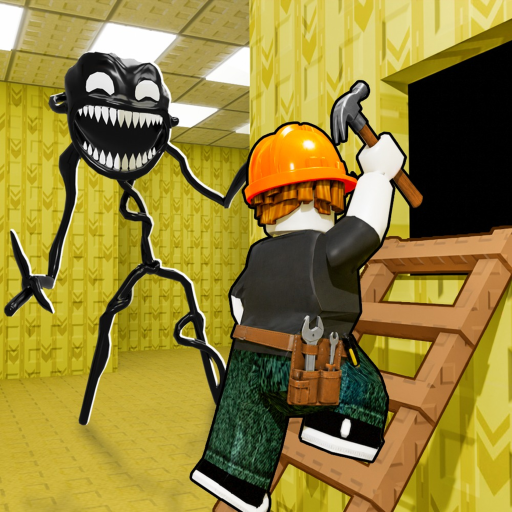
Build Your Backrooms How to Visit Other Mazes: Player Guide
Build Your Backrooms how to visit other mazes explains the official feature, safe live-interface checks, layout observation, and evidence limits. Check live.
This Build Your Backrooms How To Visit Other Mazes page starts from the evidence available for the current game and keeps changing values in the live interface. Confirm update-sensitive details on the official Roblox experience.
The official Roblox description confirms that you can enter your own maze or someone else's maze to explore. It does not publish a fixed button-by-button route, so the safest method is to use the current server interface and treat exploration as a layout-learning tool, not as proof of another player's rewards or upgrades.
What Is Officially Confirmed
Exploring both your own maze and another player's maze is part of the official game description. The archived page also lists a server size of six, which supplies multiplayer context but does not guarantee that every slot represents a visitable maze at every moment. No exact menu name or teleport sequence is verified in the collected evidence.
Use the Current Server's Visit Controls
Look for the live interface element that identifies players, mazes, or exploration. Read the destination name before confirming and avoid relying on screenshots whose labels may have changed. If no visit control is visible, finish the current tutorial step, return to the base view, or change server only through normal Roblox controls. Do not use scripts or external tools to force access.
- Confirm the destination belongs to another player.
- Use only buttons provided by the current game.
- Wait for the maze to load before judging a route.
- Return through the game's normal navigation.
| Observe | Useful question | Do not infer |
|---|---|---|
| Connections | Can the route be followed? | Hidden pathfinding rules |
| Room sequence | Where does the pace change? | A universal best layout |
| Monster position | What floor space is used? | Unpublished monster stats |
| Buildings | Which visible role do they serve? | Current cost or income |
Study a Maze Without Copying Assumptions
Walk the route and observe room connections, turn frequency, open spaces, and where monsters are placed. Those observations can inspire your own build, but they do not reveal hidden stats, live costs, or earnings. A maze may reflect a different progression stage or an older update, so copy ideas only after confirming the pieces available to your account.
Review Your Own Maze the Same Way
Enter your own maze after a structural change. Move through it as a visitor would, note dead ends or disconnected-looking transitions, and return to Build for one revision. Because a complete visitor-pathing model is not verified, repeated observation is more dependable than claiming a universal optimal layout.
For this topic, the safest habit is to compare the live result with the expected step before making another purchase. An interface-agnostic exploration workflow for entering, observing, and learning from player mazes works only when each connection and placement is accepted by the current server. If the interface disagrees with an older tutorial, follow the interface and keep the unverified value out of your notes.
A useful field check is to change one variable and repeat the same short observation. That keeps an interface-agnostic exploration workflow for entering, observing, and learning from player mazes tied to something visible instead of a theory about hidden rates. Record the room connection, current capacity, displayed cost, and result separately so a later update is easy to spot.
Do not treat silence in the official description as permission to fill a gap. For an interface-agnostic exploration workflow for entering, observing, and learning from player mazes, unknown prices, caps, stats, controls, and pathfinding details should stay unknown. You can still make progress by following placement feedback, testing a compact route, and choosing the next action from the bottleneck shown live.
The practical advantage of this method is reversibility. When an interface-agnostic exploration workflow for entering, observing, and learning from player mazes is tested in small steps, a failed connection or weak layout can be corrected without rebuilding everything. Pause after each placement, confirm the maze still functions, and spend only when the next purchase has a clear job.
Use community videos as interface demonstrations rather than patch notes. They can show where a tool appeared or how a tutorial flowed at recording time, while the official Roblox page and current game remain the authority. That distinction is especially important for an interface-agnostic exploration workflow for entering, observing, and learning from player mazes, because balance and menus may change independently.
Once the immediate check passes, walk the maze when the game allows it. Seeing the route from inside can reveal unclear openings and unused space that are difficult to notice from the build grid. Bring that observation back to an interface-agnostic exploration workflow for entering, observing, and learning from player mazes and revise one section instead of guessing at a global redesign.
For this topic, the safest habit is to compare the live result with the expected step before making another purchase. An interface-agnostic exploration workflow for entering, observing, and learning from player mazes works only when each connection and placement is accepted by the current server. If the interface disagrees with an older tutorial, follow the interface and keep the unverified value out of your notes.
A useful field check is to change one variable and repeat the same short observation. That keeps an interface-agnostic exploration workflow for entering, observing, and learning from player mazes tied to something visible instead of a theory about hidden rates. Record the room connection, current capacity, displayed cost, and result separately so a later update is easy to spot.
Do not treat silence in the official description as permission to fill a gap. For an interface-agnostic exploration workflow for entering, observing, and learning from player mazes, unknown prices, caps, stats, controls, and pathfinding details should stay unknown. You can still make progress by following placement feedback, testing a compact route, and choosing the next action from the bottleneck shown live.
The practical advantage of this method is reversibility. When an interface-agnostic exploration workflow for entering, observing, and learning from player mazes is tested in small steps, a failed connection or weak layout can be corrected without rebuilding everything. Pause after each placement, confirm the maze still functions, and spend only when the next purchase has a clear job.
Use community videos as interface demonstrations rather than patch notes. They can show where a tool appeared or how a tutorial flowed at recording time, while the official Roblox page and current game remain the authority. That distinction is especially important for an interface-agnostic exploration workflow for entering, observing, and learning from player mazes, because balance and menus may change independently.
Once the immediate check passes, walk the maze when the game allows it. Seeing the route from inside can reveal unclear openings and unused space that are difficult to notice from the build grid. Bring that observation back to an interface-agnostic exploration workflow for entering, observing, and learning from player mazes and revise one section instead of guessing at a global redesign.
For this topic, the safest habit is to compare the live result with the expected step before making another purchase. An interface-agnostic exploration workflow for entering, observing, and learning from player mazes works only when each connection and placement is accepted by the current server. If the interface disagrees with an older tutorial, follow the interface and keep the unverified value out of your notes.
A useful field check is to change one variable and repeat the same short observation. That keeps an interface-agnostic exploration workflow for entering, observing, and learning from player mazes tied to something visible instead of a theory about hidden rates. Record the room connection, current capacity, displayed cost, and result separately so a later update is easy to spot.
Frequently Asked Questions
How do I visit other mazes in Build Your Backrooms?
Use the player or maze exploration control shown by the current game interface. The feature is official, but a stable button-by-button path was not verified.
Can I enter my own maze?
Yes. The official description explicitly says you can enter your own maze or someone else's maze.
How many players can join a server?
The archived official Roblox metadata lists a maximum server size of six.
Does another player's maze show me the best build?
No. It can provide layout ideas, but it does not verify current costs, stats, rewards, or a universal optimal route.